For decades, consumer durables followed a simple rule: You save, you buy, you own.
That model is quietly breaking.
Across markets, a new pattern is emerging, not driven by discounts or financing schemes, but by a deeper shift in how consumers think about access, affordability, and control.
Today, consumers don’t necessarily want to own devices.
They want reliable access to outcomes, cooling, entertainment, and connectivity, without the burden of upfront costs or long-term commitment.
This is where Device as a Service (DaaS), powered by IoT, is rewriting the rules. Platforms like Datacultr, a DaaS enablement solution, provide the digital infrastructure needed to protect DaaS business models.
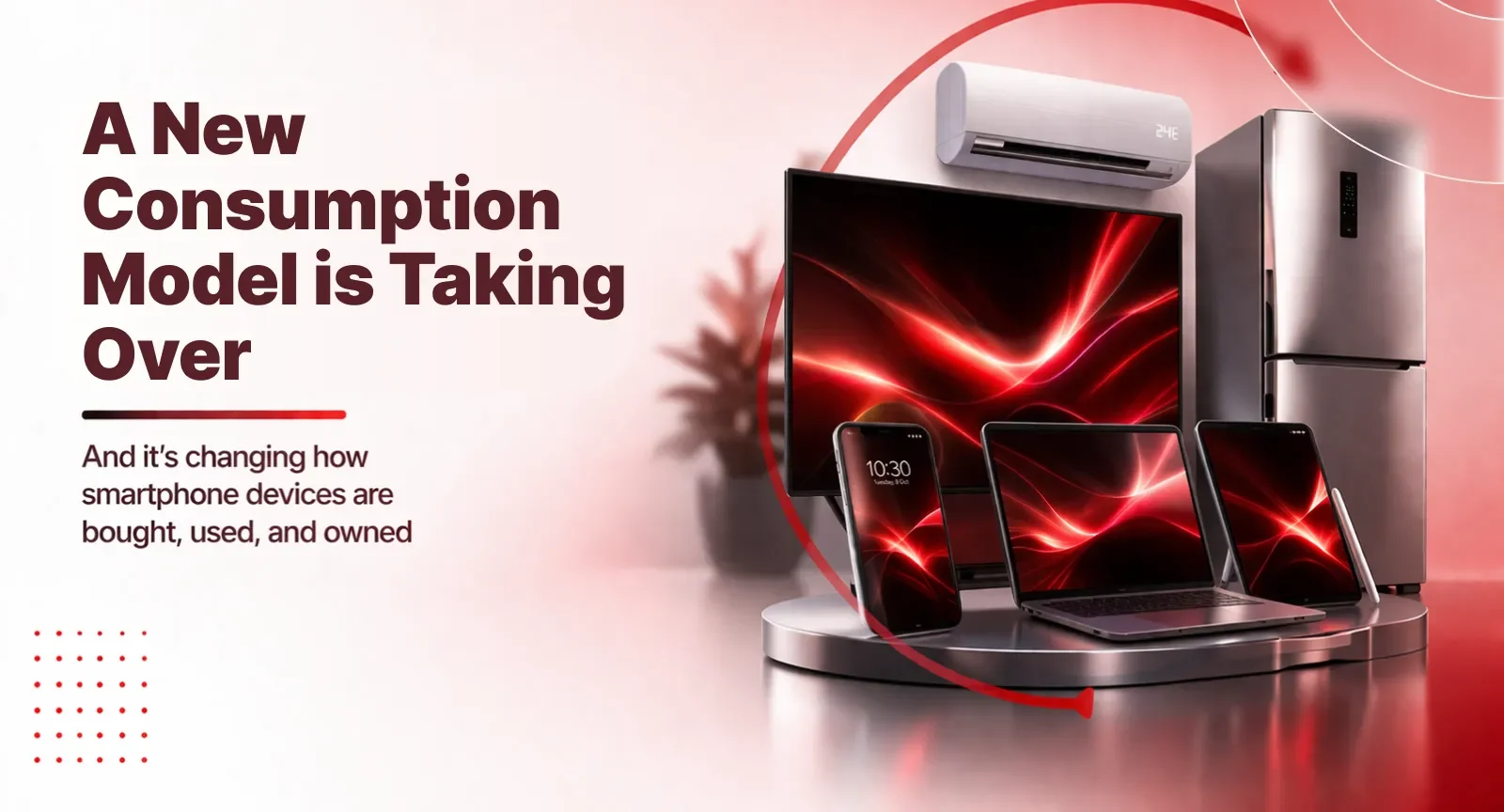
From Products to Services: The New Consumption Model
The shift is subtle but powerful.
This transformation is already visible:
- Consumers renting ACs for the summer months
- Subscribing to TVs and appliances in co-living spaces
- Paying for usage instead of ownership
- Expecting flexibility to upgrade, pause, or switch
This is not just affordability; it is a structural change in consumption behaviour.
Why This Shift Is Happening Now
Three forces are converging:
- Affordability Pressure Meets Aspiration
Consumers want better products — inverter ACs, smart TVs, premium appliances — but without the burden of high upfront payments.
- Rise of Subscription Economy
From OTT to mobility, subscriptions have normalised “pay as you use”. Durables are the next frontier.
- Mobility & Flexibility
Urban renters, migrant populations, and younger consumers prefer flexible ownership models over long-term commitments.
The Hidden Problem: Why DaaS Was Hard to Scale
Despite the opportunity, scaling DaaS for physical devices has always faced one critical challenge: Risk.
Unlike digital subscriptions, physical devices:
- Can be misused
- Cannot be easily repossessed
- Have no built-in enforcement mechanism
- Require continuous monitoring
Without control, these models become:
- High-risk for financiers
- Operationally heavy for OEMs
- Difficult to scale
This is why, historically, most appliance subscriptions remained small pilots, not scalable businesses.
The Breakthrough: Turning Devices Into Controllable Assets
The real unlock for DaaS is not flexible payment options. It is control at the device level. When a device can:
…it stops being just a product. It becomes: A digitally enforceable, finance-ready asset
This is the foundation on which scalable Device as a Service models are built.
IoT: From “Smart Features” to “Business Infrastructure”
Most conversations around IoT have focused on:
- Smart controls
- App connectivity
- User convenience
But the real transformation lies elsewhere. IoT is no longer just about making devices “smart.” It is about making them:
- Finance-ready
- Policy-controlled
- Lifecycle-managed
- Revenue-generating beyond sale
This is a fundamental shift:
From IoT as a feature → IoT as infrastructure
What This Unlocks for OEMs
For appliance brands, this changes everything.
- New Business Models Become Viable
- Subscription
- Rental
- Lease-to-own
- Usage-based pricing
- Premiumisation Without Price Barrier
High-end products can now be offered through monthly affordability instead of an upfront cost.
- Expansion Into New Segments
Thin-file and credit-invisible customers become accessible.
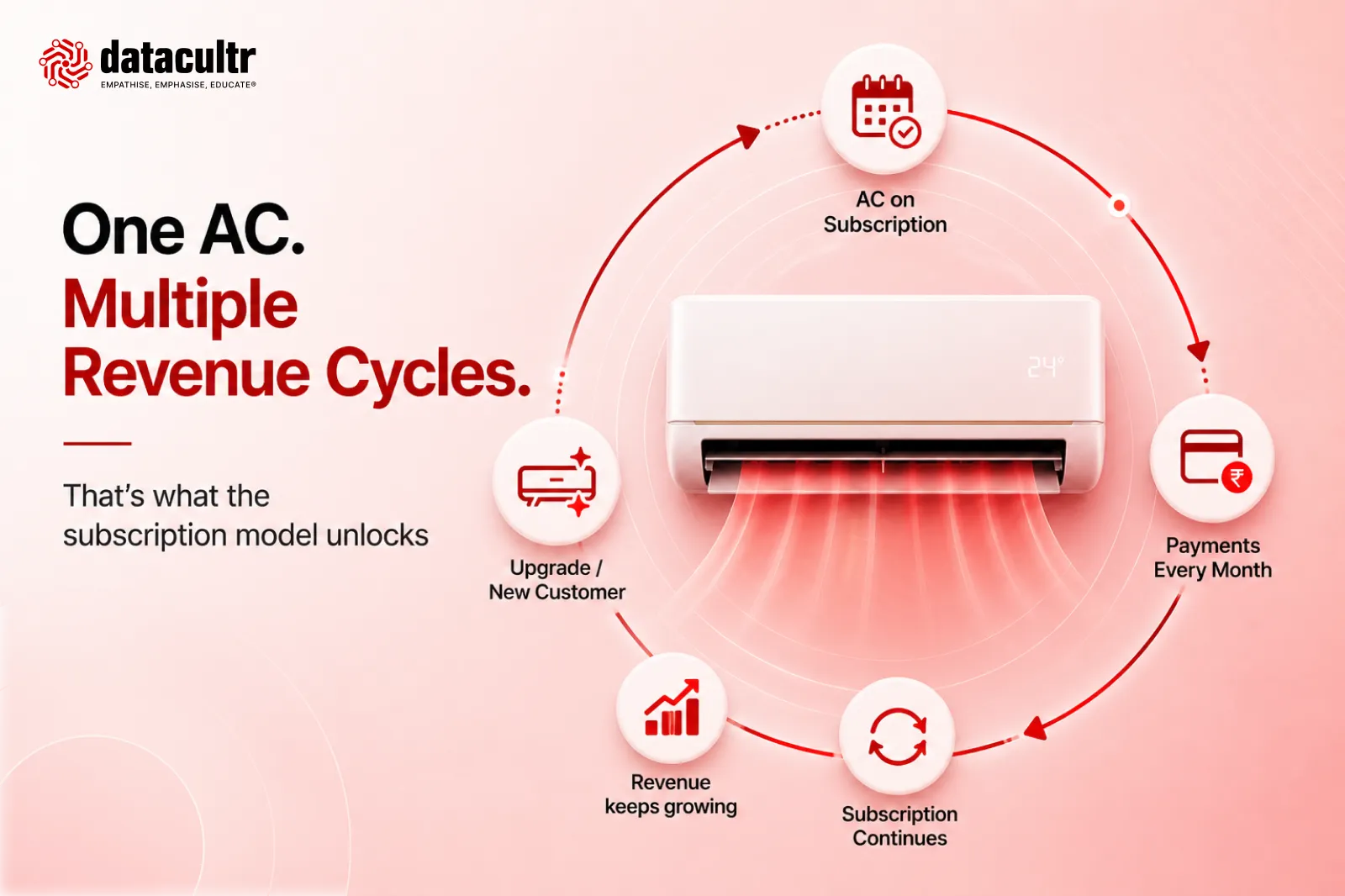
- Recurring Revenue Streams
Revenue extends beyond the first sale into the entire lifecycle.
What Unlocks this Opportunity for OEMs
- Ability to increase approval rates
- Lower default risk
- Automated collections
- Device-becomes a viable security to scale such programs
The device itself becomes live collateral, without the need for repossession.
Why Most Solutions Still Don’t Scale
While many players talk about IoT and subscriptions, very few can actually support DaaS at scale.
Because scaling requires:
- Deep integration at the device level (not just plug-level control)
- Offline enforcement capabilities
- Secure command architecture
- Real-time and edge decisioning
- Seamless integration with OEM and financing systems
- Ability to work across both smart and non-smart devices
Missing any one of these breaks the model.
Datacultr: Enabling DaaS at Scale
At Datacultr, we approached this problem differently. Instead of building:
- Just a financing platform
- Or just an IoT layer
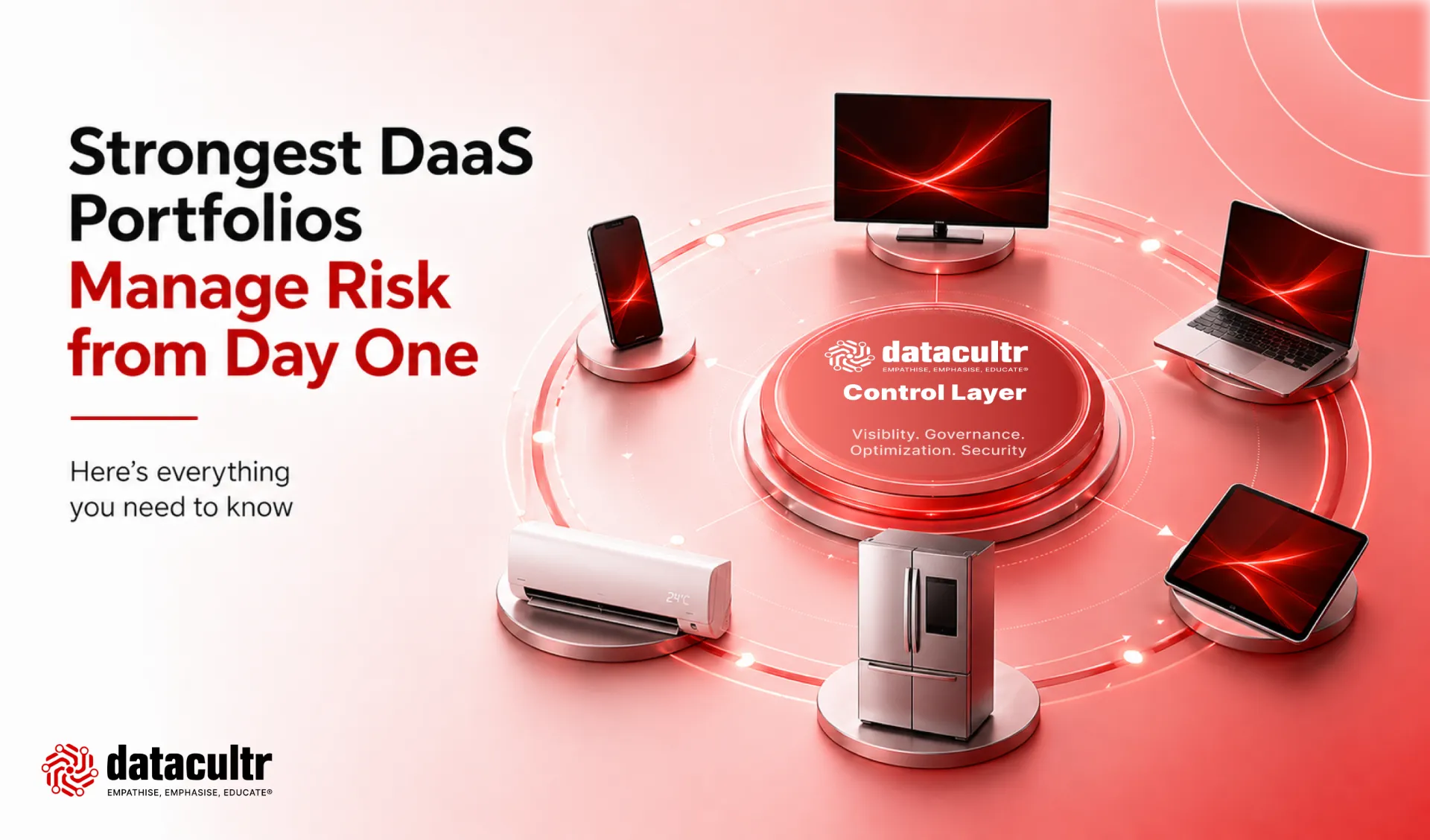
We built a unified system that connects: Device + Consumer + Financier + OEM
What makes it different:
This enables: Large-scale, secure, and compliant Device as a Service programs, not pilots, but real businesses.
The Bigger Shift: From Ownership to Infrastructure
What we are witnessing is not just a new pricing model. It is a redefinition of the industry. Appliances are no longer just products. They are becoming:
- Managed assets
- Service delivery endpoints
- Financial instruments
- Data-driven infrastructure
The Future
In the near future:
- Consumers will not ask, “What is the price?”
- They will ask, “What is the monthly plan?”
Ownership will not disappear, but it will no longer be the default.
And the companies that win will not just manufacture devices. They will build: Infrastructure for access, affordability, and lifecycle control.
About Datacultr
Datacultr is a digital risk and device management platform trusted by leading banks, NBFCs, telcos, OEMs, and retail chains across 35+ countries. The platform supports millions of devices, including smartphones, tablets, laptops, smart TVs, air conditioners, and other consumer durables. It enables secure device financing and Device as a Service (DaaS) programs at scale.
People Also Ask
What is Device as a Service (DaaS)?
Device as a Service (DaaS) is a model where customers access devices through subscriptions or rentals instead of buying them upfront. The device remains part of an ongoing service, not a one-time sale. Datacultr makes this model viable by enabling real-time control and lifecycle visibility at the device level.
What is a DaaS enablement platform?
A DaaS (Device-as-a-Service) enablement platform helps companies run device subscription programs; it does not provide devices itself.
DaaS platforms offer devices to customers, while enablement platforms like Datacultr provide the tools to manage them. Datacultr helps DaaS companies reduce risk, stay in control of devices, and improve repayments through features like device locking and communication tools.
Why is Device as a Service hard to scale?
Because physical devices are hard to control. If a device stays active even when payments stop, risk increases quickly. Datacultr solves this by adding device-level enforcement and control, ensuring usage stays aligned with payments.
What is required to run Device as a Service at scale?
DaaS needs more than subscriptions; it needs infrastructure. To scale, businesses must be able to monitor devices, manage them across their lifecycle, and enforce timely usage control. Datacultr brings these capabilities together, turning devices into manageable, service-ready assets.