For decades, the way consumers acquired devices was simple: make an outright purchase.
Whether paid upfront or through installments, ownership transferred immediately, and the relationship between manufacturer and customer largely ended at the point of sale.
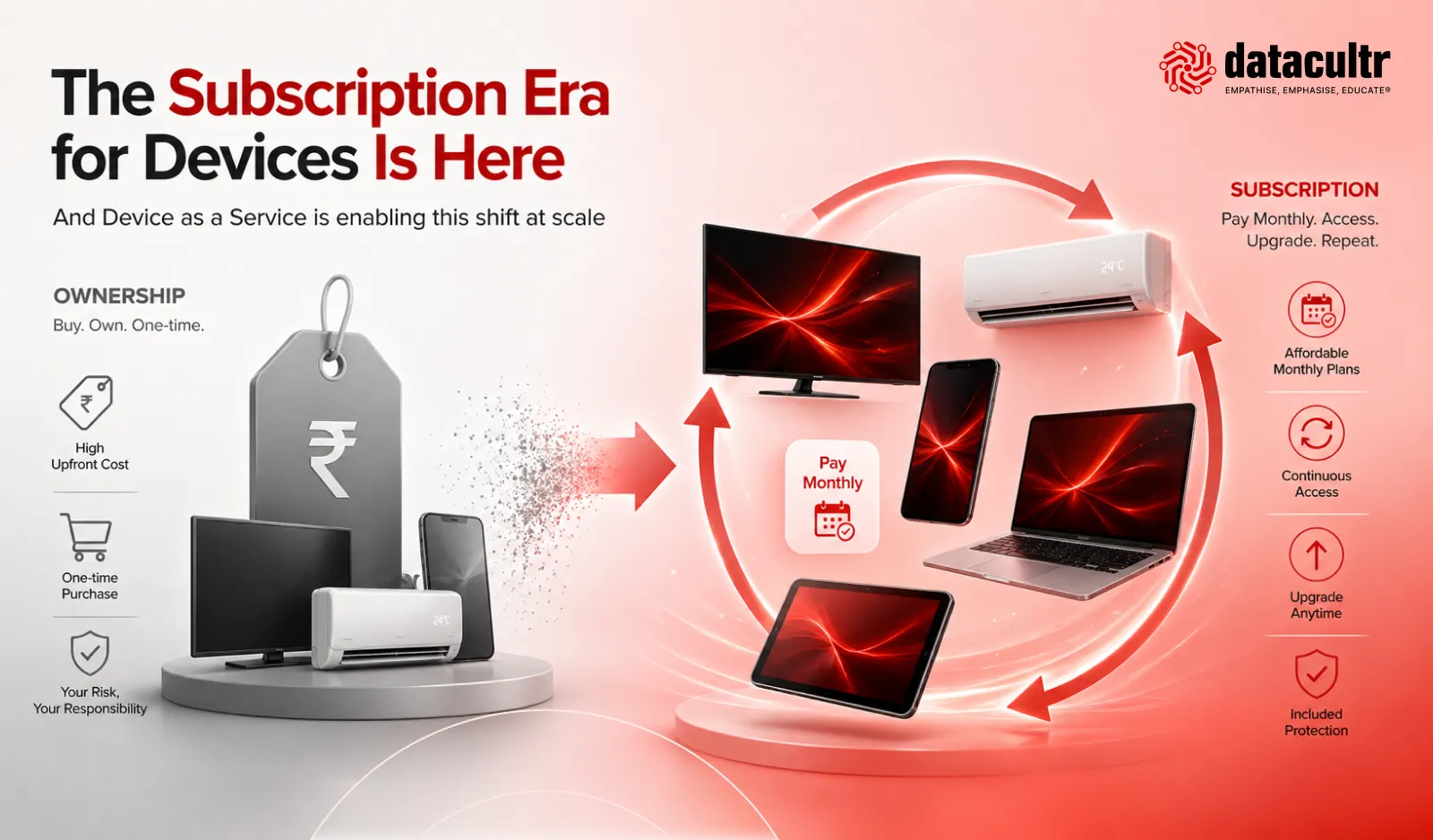
Today, that model is beginning to shift. As devices become more advanced and costly, while remaining essential to everyday life, consumers are increasingly choosing consumption over ownership.
Instead of buying smartphones, laptops, smart TVs, air conditioners, and other consumer durables, customers now prefer leasing, rental, and asset subscription model that provide ongoing access without high upfront costs.
Key Shifts
- Devices Are Becoming More Expensive: Premium smartphones, laptops, and appliances now carry significantly higher price tags than they did a decade ago. Subscription and leasing programs make these products more accessible to a broader customer base.
- Flexibility Is Becoming a Priority: Many customers prefer predictable monthly payments instead of large upfront expenses. Leasing, renting, and asset subscription model allow consumers to consume the latest technology without high upfront costs.
- Consumers Upgrade More Frequently: Technology evolves quickly, and consumers prefer upgrading devices every few years rather than keeping them for long periods. The asset subscription model makes upgrades easier without requiring a full repurchase.
Just as streaming replaced DVD ownership and ride-sharing reduced car ownership in cities, consumption-based models are reshaping how people use technology. For many consumers, the question is no longer “Can I buy this device?” but “Can I access it easily?”
This shift is giving rise to the Device as a Service (DaaS) and Appliance as a Service (AaaS) models. Datacultr, a DaaS enablement platform, provides digital solutions to manage these DaaS programs.
As these programs expand across thousands of active devices, Datacultr enables businesses to maintain operational visibility across their DaaS portfolios and customer agreements.
What Is Device as a Service (DaaS)?
Device as a Service (DaaS) is a model where devices are provided through subscription, leasing, or rental agreements instead of one-time purchases. The device becomes part of an ongoing service arrangement that typically includes:
Instead of selling a device once, businesses continue managing the device and the customer relationship over time. That ongoing relationship introduces operational responsibility across the entire device lifecycle.
Datacultr supports this by enabling businesses to manage these subscription-linked devices remotely throughout their active lifecycle, allowing them to remind customers of their usage and upcoming due dates, as well as restrict key controls and even temporarily locking the device, enabled through integrated mobile device management capabilities.
[Also Read: The End of Ownership: How IoT & Device as a Service (DaaS) Are Redefining Consumer Durables]
Why OEMs Are Exploring the Device as a Service Model
While the Device as a Service and Appliance as a Service models benefit consumers, they also create strategic advantages for businesses across the device ecosystem.
- Expanding Market Reach: High upfront prices often prevent customers from purchasing premium devices. Subscription and renting programs allow businesses to reach customers who might otherwise be excluded from the market.
- Accelerating Premium Device Adoption: When devices are offered through monthly payment models, customers are more willing to adopt higher-value products. This enables brands to expand their premium portfolios.
- Building Ongoing Customer Relationships: Traditional device sales end at the point of purchase. Device as a Service programs extend engagement beyond the sale through servicing, upgrades, and long-term usage.
- Creating Recurring Revenue: Instead of relying only on product sales cycles, businesses generate predictable revenue through subscription payments and long-term agreements.
The Operational Shift Behind Device as a Service Model
While the opportunity is significant, the DaaS model also introduces a major operational change.
In traditional ownership models, once a device is sold, the financial exposure largely ends. In Device as a Service and Appliance as a Service programs, the device remains tied to an active financial agreement. This means businesses must continuously manage:
At scale, this creates a new challenge. Devices are no longer just products being sold. They become service-linked assets that remain tied to active subscription agreements.
Maintaining control over thousands of distributed devices requires a strong mobile device management infrastructure. Datacultr enables OEMs to apply device-level enforcement actions when subscription terms are breached.
Scaling Device as a Service Model with Datacultr
As Device as a Service programs expand across smartphones, appliances, and other consumer durables, businesses need infrastructure that connects device management with financial risk control.
This is where Datacultr comes in. Through its Odyssey platform, Datacultr embeds mobile device management and real-time device-level control into subscription, leasing, and rental devices. This allows OEMs to:
By connecting device behaviour with financial agreements, Datacultr allows businesses to scale DaaS programs while maintaining operational discipline.
The Future of Devices: Consumption Over Ownership
The shift from ownership to consumption is reshaping the device economy. Consumers value flexibility, affordability, and upgrade options, while businesses are exploring ways to reach new customers and generate recurring revenue.
Device as a Service (DaaS) sits at the center of this shift.
However, the long-term success of DaaS programs will depend not only on demand and affordability, but also on how effectively businesses manage devices, customers, and financial risk as these programs scale. Datacultr plays a critical role by providing the operational control layer required for sustainable DaaS ecosystems.
About Datacultr:
Datacultr is a digital risk and device management platform trusted by leading banks, NBFCs, telcos, OEMs, and retail chains across 35+ countries. The platform supports millions of devices, including smartphones, tablets, laptops, smart TVs, air conditioners, and other consumer durables. It enables secure device financing and Device as a Service (DaaS) programs at scale.
People Also Ask
What types of devices are commonly offered through DaaS programs?
Device as a Service programs are commonly used for smartphones, laptops, tablets, smart TVs, air conditioners, and other consumer durables. These devices are well-suited for DaaS because they are high-value products that customers rely on daily and often upgrade over time. Datacultr supports these programs across multiple device categories through a unified mobile device management platform that enables monitoring, engagement, and enforcement across large portfolios.
Why are OEMs adopting Device as a Service models?
OEMs are adopting Device as a Service models to expand customer access, generate recurring revenue, and maintain long-term relationships with users. The asset subscription model also makes it easier to manage upgrades, servicing, and ongoing device usage.
How do OEMs manage risk in Device as a Service programs?
Managing risk in Device as a Service programs requires strong device management and operational visibility. Datacultr enables this by providing device-level controls and digital engagement workflows that help maintain payment discipline while scaling DaaS portfolios.