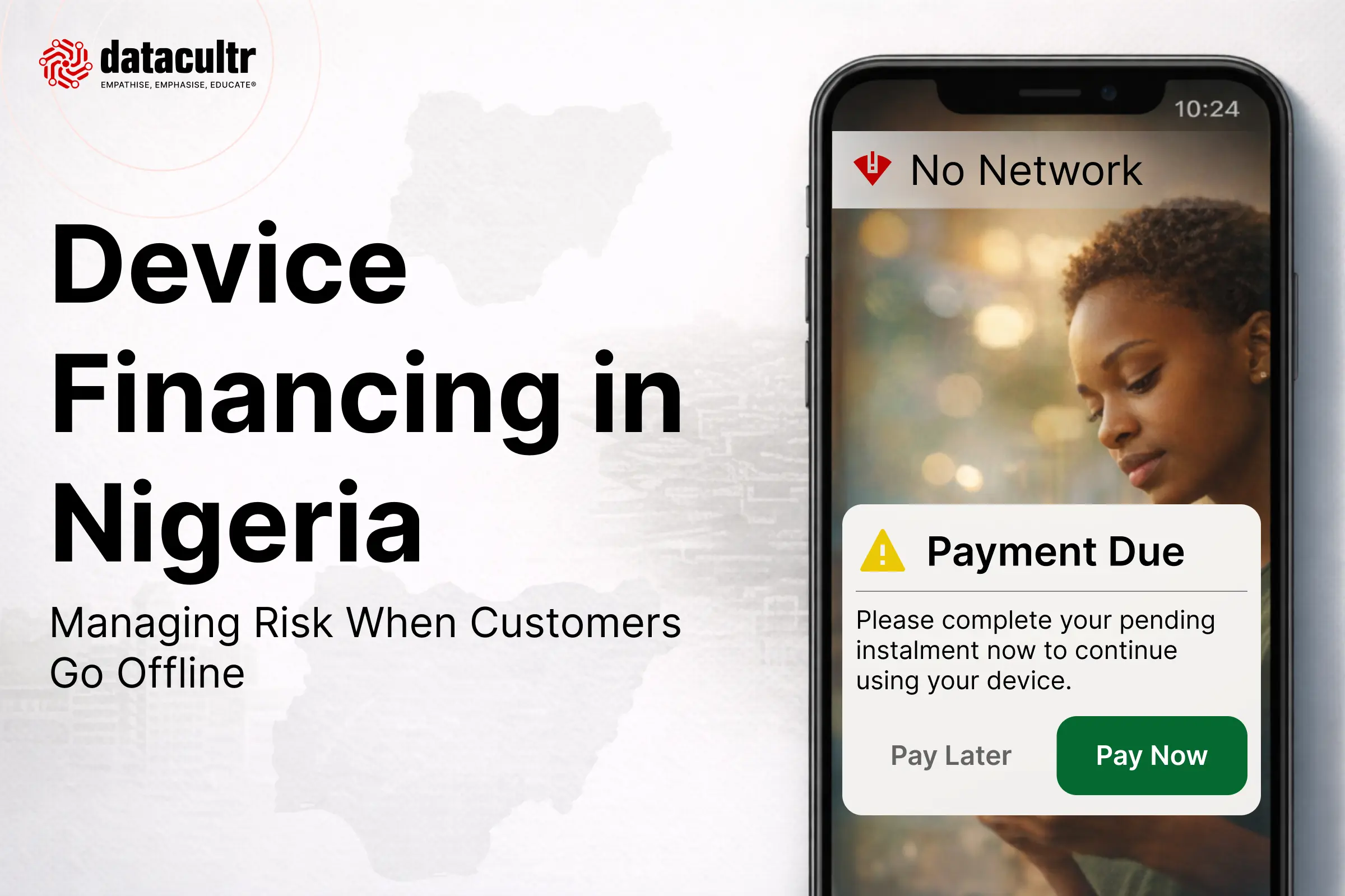
Device financing in Nigeria is expanding rapidly, driven by rising smartphone demand across urban, semi-urban, and rural markets. However, consistent internet access remains uneven. Data affordability, network variability, and geographic coverage gaps mean that a significant share of smartphone users are only intermittently connected.
Industry estimates suggest that nearly 40 million people in Nigeria remain digitally disconnected, creating challenges for phone financing models. For lenders, NBFCs, and microfinance institutions operating in Nigeria and across Africa, this creates a challenge: repayment models built on continuous internet access are exposed by design.
The question, therefore, is simple: How do you run device financing when customers are frequently offline?
The answer is not more reminders. It is building a device financing model where core controls remain effective during offline periods.
Why Traditional Phone Financing Models Struggle in Nigeria
Most smartphone financing models are built on assumptions that do not consistently hold in Nigeria or similar African markets:
- Customers are regularly connected to the internet; they are not
- Payment reminders reach borrowers via data-based notifications; they do not
These assumptions often fail. Borrowers may:
- Use prepaid SIMs with limited or no data
- Move in and out of network coverage
- Miss payment reminders because the device is offline
- Remain unreachable
When these gaps occur, repayment visibility weakens and default risk increases, forcing collections teams to rely on delayed, manual, or field-based recovery methods. This is not a borrower intent issue. It is a model-design issue.
What Are the Biggest Challenges in Device Financing in Nigeria?
Operating device financing programs in Nigeria and other African markets introduces a consistent set of challenges:
Limited Visibility
Without consistent connectivity, lenders cannot rely on real-time or app-based engagement to track repayment behavior.
Rising Default Risk
Missed reminders and delayed controls allow small payment slips to escalate into delinquency.
SIM Churn and Device Misuse
In prepaid markets, SIM swaps and device reset attempts weaken lender control over financed devices.
High Cost of Recovery
Physical recovery or agent-led collections in rural or semi-urban areas are expensive and often inefficient.
The Role of Device Lock Technology in Smartphone Financing
One of the widely used risk controls in phone financing is device lock technology. Platforms like Datacultr allow lenders to manage device access as part of the financing process.
When applied appropriately, device lock technology can:
- Restrict device usability when payments are missed
- Discourage prolonged non-payment
- Reinforce repayment discipline
Datacultr helps lenders move from trust-based lending to a more secure, technology-backed approach, reducing default risk in markets like Nigeria.
How Datacultr Supports Device Financing in Nigeria and Other African Markets
In Nigeria and across Africa, device financing operates in difficult conditions. Customers go offline, payments are delayed, SIM cards change, and lenders often lose the ability to reach the borrower at the exact moment control is needed.
Datacultr is designed for these realities. Its Auto Lock supports offline device locking through API-driven programming, locking a device on a predefined date even if the customer has no internet access, ensuring repayment controls remain active during offline periods.
To prevent misuse, Datacultr’s device lock application is designed to resist factory resets and cannot be deleted, reducing common attempts to bypass controls in prepaid markets. Datacultr also supports direct-to-device communication, showing payment reminders and messages on the device itself rather than relying only on internet-based notifications.
By linking device use directly to repayment behaviour, Datacultr helps lenders reduce defaults and lower dependence on physical recovery in African markets.
[Also Read: How Datacultr’s Device Lock Encourages Regular Payments for Device Financing in South Africa]
Takeaway for Risk and Collections Leaders
Device financing in Nigeria will continue to grow, but customers are not always online.
For risk and collections leaders, the real question is not whether customers go offline, but whether repayment controls still work when they do.
Financing models that depend on internet access stop working when customers go offline. Models that include offline controls, such as predefined-date device locking (Auto Lock), continue to work even without internet, helping lenders reduce losses as device financing grows.
People Also Ask
Is offline capability important for device financing in Nigeria?
Yes. Many Nigerian users experience intermittent or expensive internet access, which makes internet-dependent repayment communication unreliable.
How does device lock technology reduce default risk in phone financing?
Device lock technology limits device usability when payments are missed, reinforcing repayment discipline without relying on agents or physical collections.
Why do internet-based payment reminders fail in the African market?
SMS and app-based reminders depend on stable connectivity and phone numbers, both of which are frequently disrupted by SIM churn and data constraints.