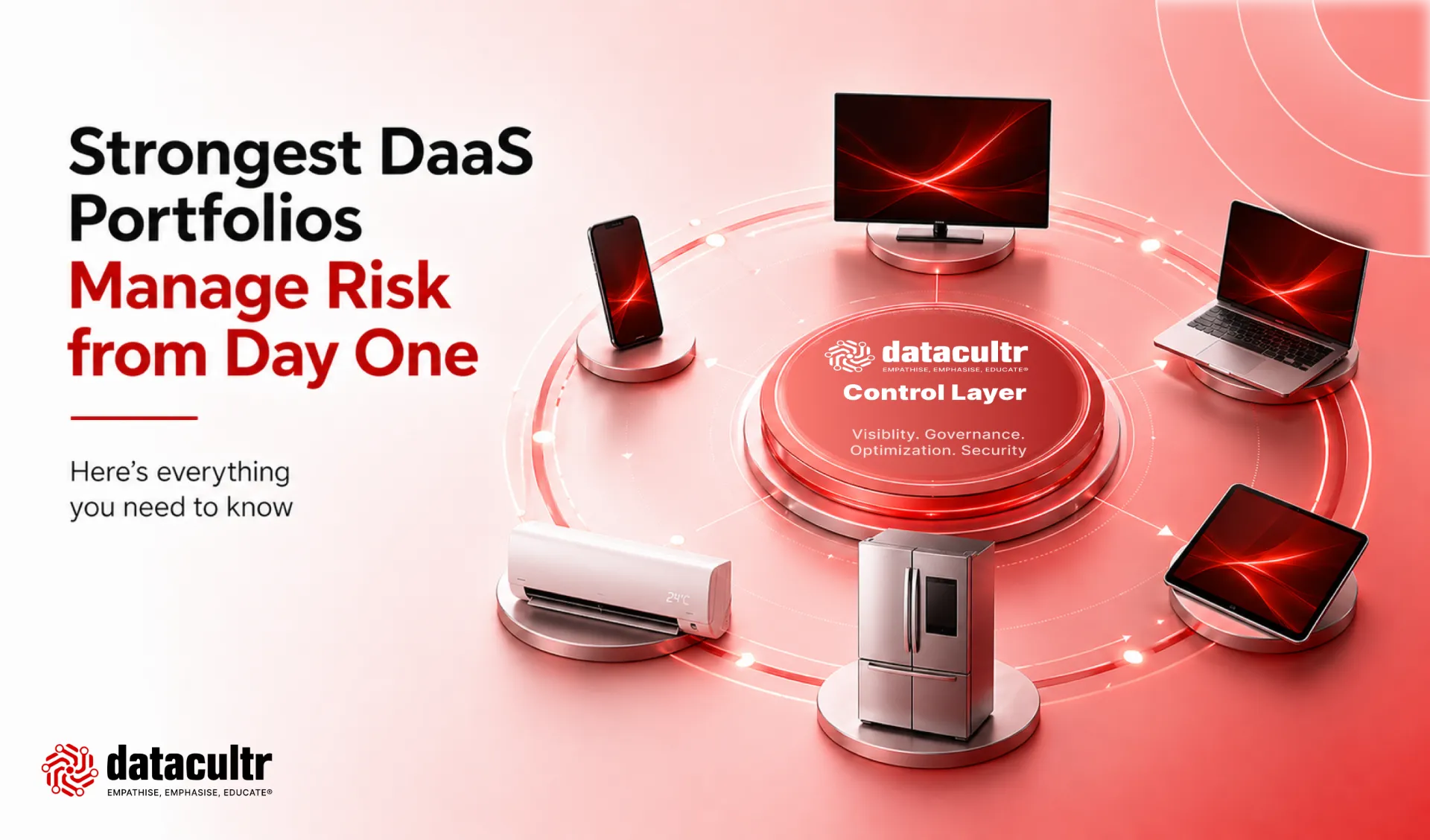
Device as a Service (DaaS) is changing how customers access devices. Instead of buying devices upfront, customers can now use them through subscription, leasing, or rental models.
For OEMs and service providers, DaaS is no longer just an idea. It is becoming a real and growing business model. So, the question is no longer what DaaS is, but how to scale it effectively.
As adoption grows across laptops, tablets, smart TVs, air conditioners, and other consumer durables, DaaS is becoming a strong growth opportunity. Industry projections estimate the DaaS market could exceed $2.1 trillion by 2034.
But this shift also changes how risk works. Devices remain linked to customer payments throughout the subscription period. This means financial exposure starts as soon as the device is activated, not just when a payment is missed.
As portfolios grow, this exposure increases. When thousands of devices are active at the same time, even small gaps in operations can spread across the entire portfolio.
Scaling DaaS Portfolios: Where Challenges Begin
In early-stage DaaS programs, operations are simple.
But as portfolios grow, these same actions must happen across thousands of devices, regions, and customer segments. At scale, three challenges become clear:
- Follow-up becomes inconsistent: Small delays in reminders or enforcement start adding up and affect overall repayment trends.
- Device visibility reduces: As devices move across locations, it becomes harder to track where they are and how they are being used.
- Response slows down: Delays between an issue and action can lead to defaults and longer recovery cycles.
These risks are not new. This is why strong device risk management becomes critical to scaling DaaS.
Risk Management for Device as a Service: What Scalable Programs Get Right
Profitable DaaS portfolios are not built on approvals alone. They depend on consistent, built-in operational control, supported by three key capabilities:
- Clear Visibility: Teams must be able to see repayment status and device activity in real time.
- Device-Level Control: Device usage must stay linked to repayment. This includes controls like remote locking or usage restrictions when payments are missed.
- Structured Lifecycle Management: Upgrades, relocations, returns, and replacements must follow defined processes to avoid loss of control.
When these capabilities are in place, DaaS portfolios can scale without hidden risks building up.
Datacultr: Building Control into Scalable DaaS Programs
As DaaS portfolios expand across laptops, smart TVs, tablets, air conditioners, and other high-value consumer durables, manual processes are not enough. Control needs to be built into the device itself.
Datacultr integrates device-level intelligence directly into subscription-based devices. This helps businesses stay aligned with repayment throughout the lifecycle, instead of reacting after issues appear. Datacultr supports scaling the DaaS model through:
- Device-Level Remote Controls: Align device usage with repayment or subscription status in a structured and predictable way.
- Broad Device Compatibility: Operate across smart and non-smart devices without fragmented systems.
- Structured Digital Engagement: Deliver reminders and repayment-linked communication through companion apps or SDK integrations.
- Configurable Risk Workflows: Align enforcement and engagement processes to your Device as a Service model.
When device risk management is embedded into the asset itself, scale strengthens stability instead of weakening it.
What This Enables
- Expand into new customer segments while maintaining repayment discipline
- Scale high-value device portfolios without losing post-installation control
- Reduce reliance on field recovery and manual collections
- Maintain consistent cash flow as active device volumes grow
- Protect margins as DaaS scale increases
Instead of tightening approvals after losses appear, businesses grow with confidence, knowing that control scales alongside device volume.
Device as a Service Is Scaling. The Opportunity Is Now.
The opportunity in Daas is clear. Demand is strong, and adoption is accelerating across device categories and markets. But as this opportunity expands, recurring revenue models require recurring control.
As you scale device volumes or enter new segments, ensuring that your risk management for device as a service is built for sustained scale becomes a business necessity. If you want to scale DaaS programs without increasing volatility, contact us to explore how device-level control can be embedded into your model from day one.
About Datacultr:
Datacultr is a digital risk and device management platform trusted by leading banks, NBFCs, telcos, OEMs, and retail chains across 35+ countries. The platform supports millions of devices, including smartphones, tablets, laptops, smart TVs, air conditioners, and other consumer durables. It enables secure device financing and Device as a Service (DaaS) programs at scale.
People Also Ask
What are the biggest risks in a DaaS portfolio?
The biggest DaaS risks usually show up after scale: delayed payments spreading across many active devices, weak visibility into where devices are and how they’re being used, and slow operational response to exceptions like misuse or untracked returns.
Why should OEMs adopt Device as a Service (DaaS)?
DaaS helps OEMs grow without increasing risk. For OEMs, it enables subscription, rental, and lease models, makes premium devices more affordable through monthly payments, and opens access to new customer segments. It also turns one-time sales into recurring revenue.
How can you scale Device as a Service (DaaS) without increasing risk?
Scaling DaaS requires control at the device level. This includes real-time visibility into device activity, structured repayment-linked controls such as remote locking, and defined lifecycle processes for returns, upgrades, and relocations. Datacultr embeds these controls directly into devices, ensuring portfolios can scale without losses increasing alongside device volumes.