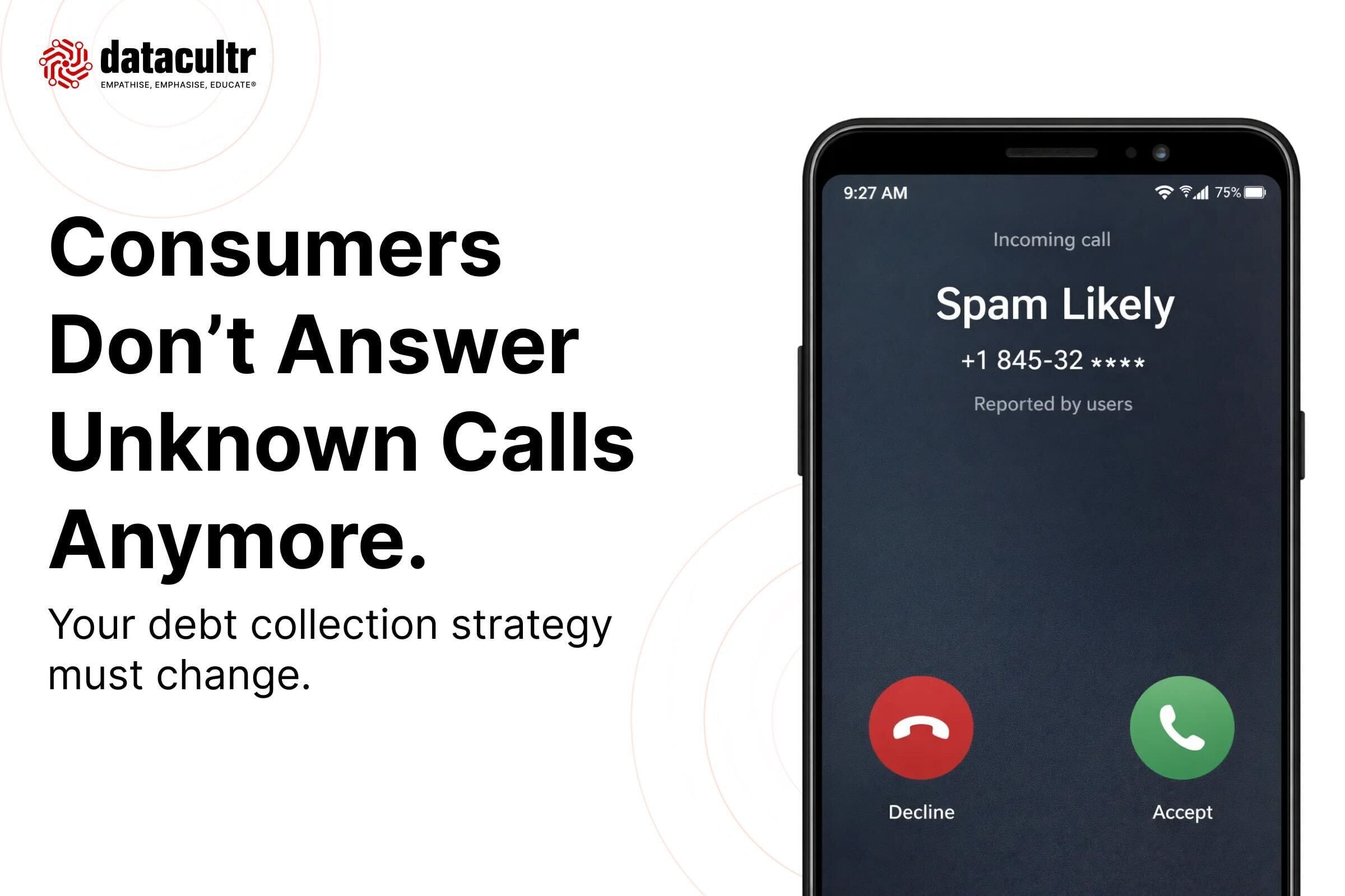
Debt collection isn’t getting harder because customers don’t want to pay. It’s getting harder because customers don’t want to engage the way they used to.
Once upon a time, people opened letters and answered unknown calls. Some even opened their doors to strange salesmen! Today, that trust is gone. Customers don’t engage; they defend. Spam filters and call blocking now decide who gets through.
So ask yourself this: If your debt collection strategy still depends on calls connecting and numbers staying valid, how confident are you in your reach?
Why Debt Collection Expectations Have Changed
Consumers now live in a world flooded with unwanted calls.
In just one quarter, 13.7 billion suspected spam calls were flagged globally. That volume conditions consumers to ignore unknown numbers, regardless of whether the call is legitimate or not.
This has quietly reset expectations for debt collection. Borrowers now assume unknown outreach could be spam, and generic or repeated follow-ups are more likely to be ignored than engaged with.
When outreach is clearly identifiable, branded, and purposeful, engagement improves. Debt collection still works, but only when it aligns with how the consumer is expecting it to be.
Why Traditional Debt Collection Strategy is Leaking Outcomes
Traditional debt collection was built around stable contact paths:
- One borrower, one phone number
- A call center that can “work the account”
- Field escalation when required
But today, collection teams run into the same issues repeatedly:
- Borrowers change numbers and SIMs
- Calls go unanswered, flagged, or blocked
- Contact attempts increase, but certainty drops
As a result, right-party contact drops and follow-ups become repetitive. It is a mismatch between how debt collection operates and how consumers behave today.
[Also Read: Why Traditional Debt Collection Strategies Are Failing?]
Personalised Digital Debt Collection Is No Longer Optional
Modern debt collection is increasingly shaped by digital debt recovery models that prioritize reach, relevance, and respect. Consumers respond better when:
Communication remains
clear and trusted
However, if your messages land in spam folders, your calls hit dead numbers, or your borrower has moved on digitally, your “digital” system still leaks at every step. This is where the next shift in debt collection strategy begins: moving from channel-led execution to device-aware and behavior-driven recovery.
Why Debt Collection Needs Device-Level Intelligence
Most digital debt collection still depends on one fragile layer: the phone number. But what happens when:
- The SIM changes?
- The device goes offline?
- The customer ignores calls but still uses the device daily?
Your outreach exists, but your influence weakens, and repayment discipline becomes inconsistent. Device-level intelligence addresses this structural gap by anchoring debt collection to what remains stable in the borrower journey: the device itself.
[Also Read: Reach. Recover. Repeat. The Future of Digital Debt Collection]
The Datacultr Layer That Makes Digital Debt Recovery Predictable
Datacultr addresses this gap with a device-level control and intelligence layer that works beyond phone numbers, networks, and assumptions.
Datacultr’s digital debt collection platform offers:
- Direct-to-device communication, independent of phone numbers or email IDs
- Offline-capable controls, ensuring enforcement even without connectivity
- Behavior-based workflows, triggered by repayment actions, not guesswork
- Configurable, compliant engagement, aligned with modern consumer expectations
This shifts debt collection from a rigid and blind process to a behavior-aware system. Companies using Datacultr’s digital debt collection platform have seen:
25%
67%
These outcomes are not driven by more follow-ups, but by reliable reach and consistent actionability.
Debt Collection is Moving Toward One Idea: Predictable Outcomes
The future of debt collection is not louder communication or higher effort. It is consistency across reach, engagement, and enforcement. When you combine:
- Consumer-aware communication, and
- Device-level reach and control
…you move from hoping your strategy works to knowing it will hold across real-world conditions.
So ask yourself: Is your debt collection strategy built for the way customers behave today, or is it still working within the traditional methods of debt collections?
People Also Ask
What is a digital debt collection platform?
A digital debt collection platform is a technology system that helps lenders manage debt recovery using automated, data-driven workflows instead of manual calls and field visits. Modern digital debt collection platforms like Datacultr improve reach, reduce operational effort, and support more predictable debt collection outcomes.
Why are phone-number-based debt collection models becoming less effective?
Phone-number-based debt collection models are less effective because borrowers frequently change SIMs, block unknown calls, or remain unreachable despite using their devices daily. This reduces right-party contact and recovery predictability, prompting lenders to adopt digital debt recovery strategies that go beyond phone numbers.
How can lenders build a future-ready debt collection strategy?
Lenders can build a future-ready debt collection strategy by reducing reliance on calls and adopting digital debt recovery systems that align with modern consumer behavior. Digital debt collection platforms like Datacultr help lenders maintain reach, control, and predictability even when contact details or connectivity change.